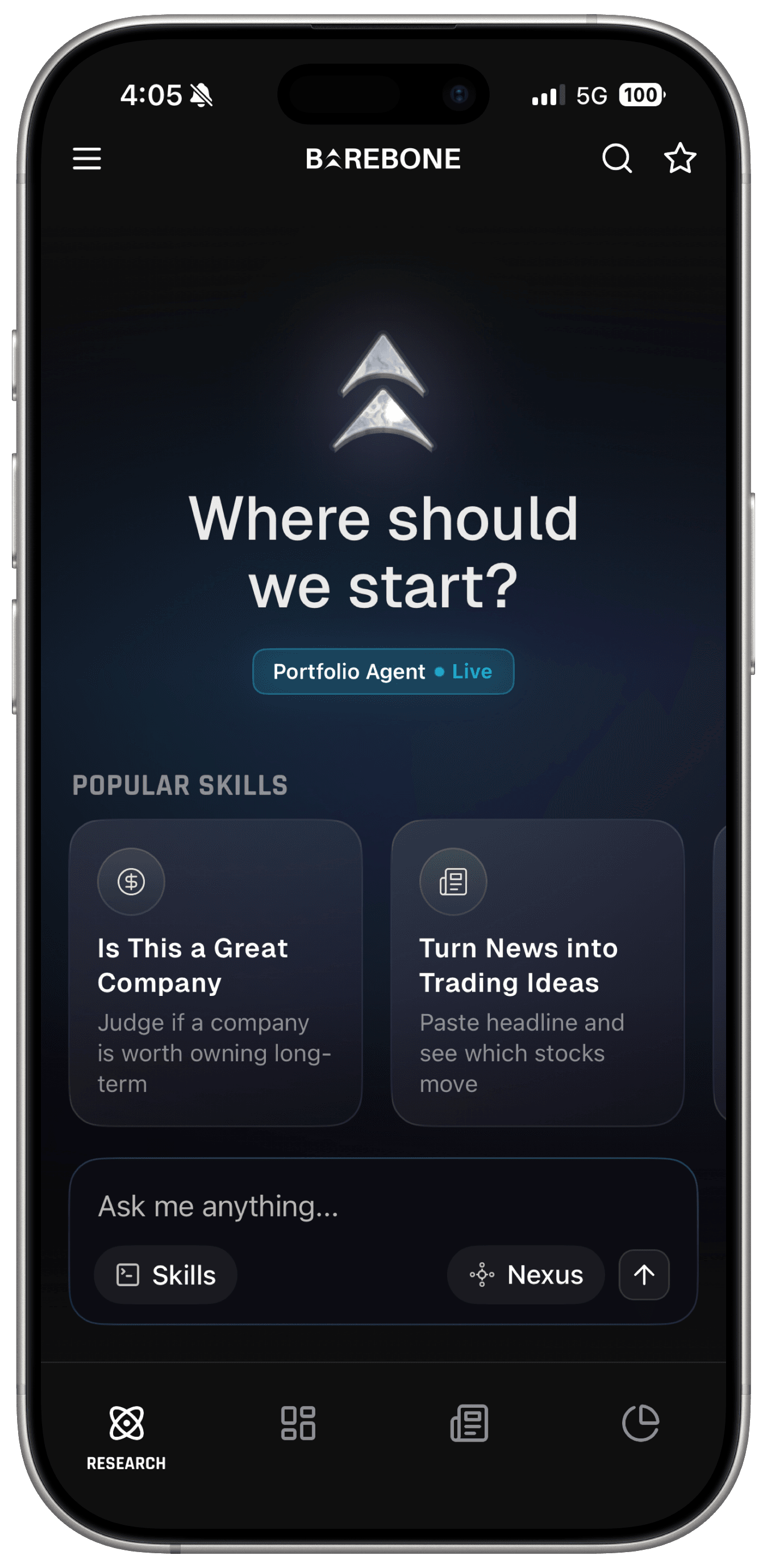
Physicians use AI research tools to compress hours of market reading into minutes: a two-minute morning brief, direct answers to specific questions, and automated portfolio monitoring. The AI doesn't decide anything for you - it eliminates the time cost of staying informed, which is the part of investing busy doctors actually lack.
Why Is Keeping Up With Investments So Hard for Physicians?
Medicine has a peculiar money problem: high income, zero time to manage it.
The income side is well documented. Per Medscape's 2026 compensation data, internal medicine averages roughly $307,000 a year and cardiology roughly $575,000. Most physicians end up with meaningful capital to allocate - and about 40% look for supplemental income beyond their primary role, per Medscape's physician survey of 7,300+ doctors.
The time side is the problem. The American Medical Association reports that most physicians work 40 to 60 hours per week - and nearly one in four works 61 to 80. After clinic, charting, and call, "read earnings reports for two hours" is not a realistic line item. So the portfolio gets checked in stolen moments, decisions get made on headlines, or everything gets ignored until something breaks.
Physicians are one of Barebone AI's largest user groups, which is why this workflow is well understood. One thing to be direct about: this article is about compressing research time. It is not advice about what to invest in, and AI shouldn't be telling you that either.
What Does a Two-Minute Morning Brief Look Like?
The old way to "stay informed" was scanning financial media over coffee and hoping the important things surfaced. The AI-era version is a dashboard that has already done the triage by the time you open it:
- 30+ live market indicators - US and global equities, Treasury yields, commodities, crypto - in one glance
- An AI-generated news brief with the overnight stories that actually moved markets
- Top gainers and losers with plain-English explanations of why they moved
- Today's earnings reports and economic events (CPI prints, Fed decisions) so nothing ambushes you mid-shift
Two minutes between parking the car and the first patient, and you have the same situational awareness that used to take an hour of reading. This shift is broad-based: more than 60% of retail investors now use AI to research stocks or other assets, per a 2026 Investing.com survey.
Why Ask One Question Instead of Reading Twenty Articles?
Here's the real time sink in DIY research: you don't have a "read the news" problem, you have a specific question - "NVDA dropped 6% overnight; does that change anything fundamental?" - and you're forced to reverse-engineer the answer from twenty generic articles written for everyone.
AI research tools invert that. You ask the question directly, in plain English, and the platform pulls live data - the price action, the filings, the analyst estimates, the sentiment - and answers your question in seconds, with charts and ratings instead of paragraphs to skim. On Barebone AI, every figure in that answer is verified against the underlying financial data before it's shown, which matters enormously when you have no spare time to fact-check a chatbot. (General chatbots fail that test at documented rates - see Can You Trust AI for Investment Research? for the studies.)
The compounding effect is what physicians tell us matters: a question you'd have postponed to "the weekend" gets answered in the elevator, so small uncertainties stop piling up into neglect.
How Does Portfolio Monitoring Do the Watching for You?
You cannot watch the market during a procedure. Software can, and should:
- Read-only broker sync (or manual entry) so the platform knows what you actually hold - it can see positions, never trade them
- News scored for relevance: every headline gets an AI market-impact score and a list of affected tickers, including a "what this means for your holdings" note when one of yours is involved
- Watchlists and alerts that ping you only for genuine moves on names you care about - not engagement-bait notifications
- On-demand AI portfolio analysis covering growth, risk, concentration, income, and momentum, for the quarterly check-in you'd otherwise never schedule
The mental model: the app holds the pager for your portfolio. You stop checking; it tells you when checking is warranted. One physician-pattern review on the App Store puts it plainly: "The only financial research app you need. With Barebone, I was able to keep up with the market despite busy schedules."
What If You're an Expert in Medicine, Not Markets?
Most physicians are intelligent novices in finance - deep expertise in one demanding field, limited bandwidth to build it in another. Generic finance content handles this badly: it's either oversimplified or assumes you know what EV/EBITDA means.
Proficiency-adaptive AI handles it well. Set your level to beginner and every analysis explains its terms as it goes - what a valuation multiple is, why a stop-loss exists, what insider selling does and doesn't signal. Set it to advanced and the same research engine delivers trading-desk depth. You can also ask the question a textbook can't answer efficiently: "Explain what this earnings miss means like I'm smart but not in finance."
That's the realistic path: you don't need a CFA to be an informed steward of your own money - you need analysis that meets you at your level and gets sharper as you do.
What AI Research Can't Do for a Doctor
Honesty section, because the limits matter more for time-poor users, not less:
- It can't predict markets. No AI can. Anything claiming otherwise is a red flag, full stop.
- It can't make your decisions. Risk tolerance, time horizon, and personal circumstances are yours. AI research is an input to judgment, not a substitute for it.
- It isn't advice. Personalized investment advice is a regulated activity. A research platform gives you data and analysis; if you want someone to take responsibility for recommendations, that's a licensed human professional - and the two are complementary, not competing.
- It can't fix a bad plan. If the underlying strategy is unsound, faster research just gets you to the wrong place sooner.
What it can do is collapse the honest time cost of staying informed from hours you don't have to minutes you do.
Where Should a Time-Poor Physician Start?
Start small: pick the two or three positions you already hold, put them on a watchlist, read the two-minute brief for a week, and ask one real question per day. If the tool earns its place in your routine, expand from there. The broader landscape is mapped in best AI investing apps if you want to compare options first.