Earnings Season Is the Most Dangerous Time to Be Uninformed
Four times a year, publicly traded companies report their quarterly results. In the hours after these reports, stocks routinely move 5%, 10%, sometimes 20% or more in a single session. Careers on Wall Street are made and destroyed during earnings season.
For individual investors, earnings season is often a source of confusion: "The company beat estimates, so why is the stock down?" or "They missed on revenue, but the stock is up 15%?"
The relationship between earnings results and stock reactions is more nuanced than beat = up and miss = down. AI can help you understand what actually matters.
What Happens During an Earnings Report
When a company reports quarterly results, they release:
-
Earnings Per Share (EPS): The company's profit divided by shares outstanding. Wall Street analysts publish consensus estimates before the report. A "beat" means actual EPS exceeded estimates. A "miss" means it fell short.
-
Revenue: Total sales for the quarter. Revenue beats/misses matter because they show whether the company is growing its top line, not just cutting costs.
-
Forward Guidance: Management's forecast for the next quarter or full year. This is often MORE important than the actual results, because stocks are valued on future expectations, not past performance.
-
Margins: Gross margin, operating margin, and net margin trends. Are they expanding (getting more profitable) or compressing (costs rising faster than revenue)?
-
Segment Breakdown: How different business lines performed. For a company like Amazon, the difference between cloud-computing growth and retail growth tells completely different stories.
Why Stocks Move "Wrong" After Earnings
The most common source of confusion: a company beats on both EPS and revenue, but the stock drops. Here's why:
The Expectations Game
Wall Street analysts publish consensus estimates, but institutional traders set their own, often higher "whisper numbers." A company might beat the published estimate but miss the whisper number. The published beat is irrelevant - the stock trades on what big money actually expected.
Guidance Trumps Results
Results are backward-looking. Guidance is forward-looking. A company can report a blockbuster quarter but guide lower for next quarter due to macro concerns, seasonal slowdown, or increased competition. The stock sells off on the guidance, not the results.
Quality of the Beat
Not all beats are equal. Did EPS beat because revenue grew, or because the company cut costs? Revenue-driven beats are healthy. Cost-cutting beats are finite - you can only cut so much before the business shrinks.
Already Priced In
If a stock rallied 15% in the two weeks before earnings, the market already priced in a beat. Even a solid report might trigger "sell the news" as traders take profits.
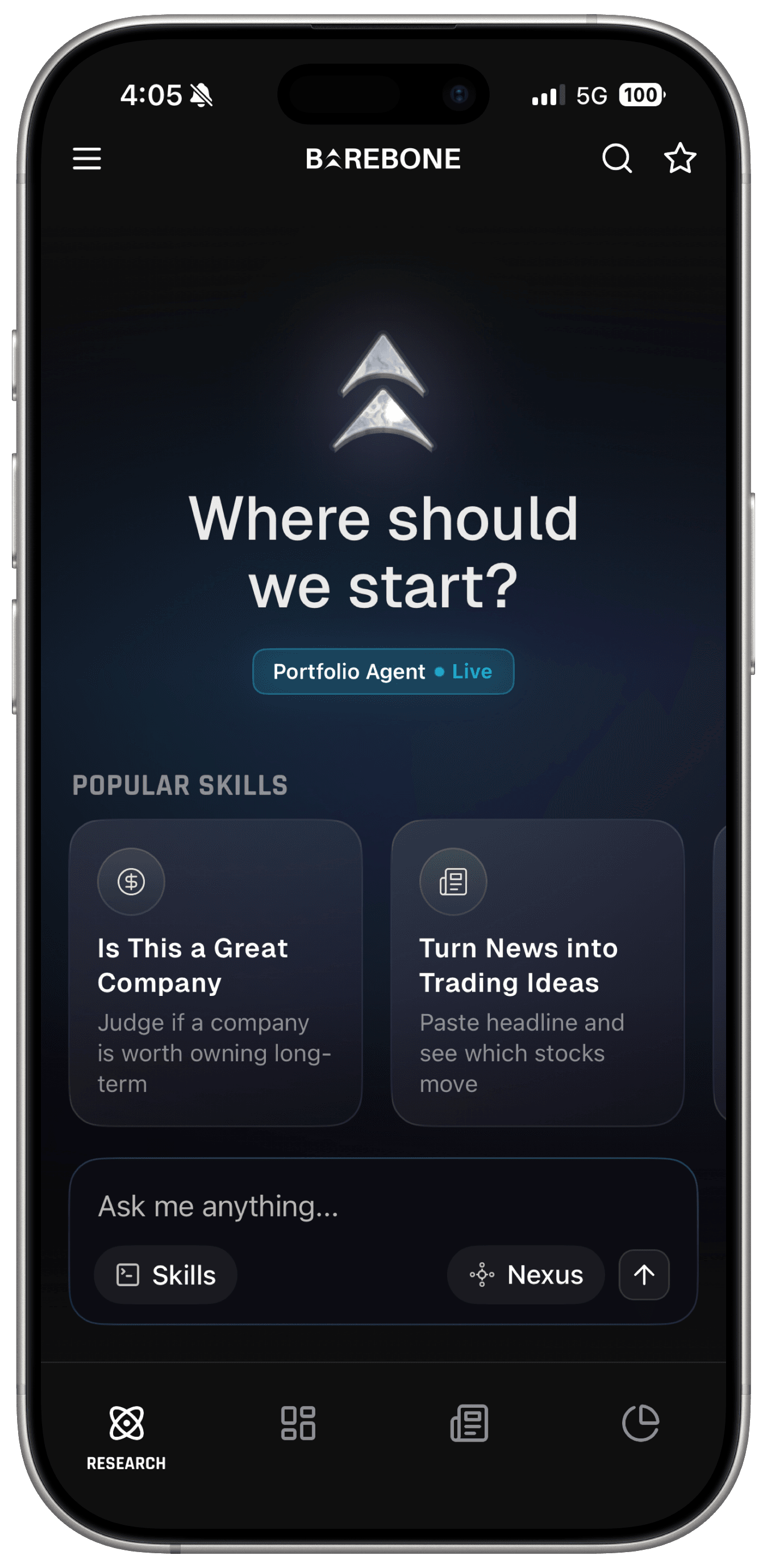
How Barebone AI Handles Earnings
Earnings Calendar
The Dashboard includes a comprehensive earnings calendar showing:
- Which companies report this week, with exact dates
- Pre-market or after-market timing - know when to expect the move
- Consensus EPS estimate and revenue forecast
- One-tap AI analysis that launches pre-generated earnings-focused research questions
"Earnings Winners & Losers" Skill
After earnings are reported, this Skill scans for the biggest post-earnings movers and provides:
- EPS actual vs. estimate (beat or miss and by how much)
- Revenue actual vs. estimate
- The percentage stock move
- AI-generated explanation of WHY the stock moved the way it did - what specifically in the report drove the reaction
- Whether the move was driven by results, guidance, margins, or segment performance
Pre-Earnings Research
Before a company reports, you can use multiple Skills to prepare:
- "Is This a Great Company" - understand the fundamental quality going into the report
- "What Investors Are Saying" - see whether Wall Street and retail investors are positioned bullishly or bearishly ahead of earnings
- "Best Case & Worst Case" - understand the range of possible outcomes
- "When to Buy and Sell" - identify key technical levels that might act as support or resistance after the earnings move
Post-Earnings Analysis
After results are released, the AI can analyze the actual report:
- What were the key surprises (positive or negative)?
- How did guidance change relative to prior expectations?
- Did analyst ratings or price targets change in response?
- Is the post-earnings price creating a new entry opportunity or a reason to exit?
The Earnings Workflow for Smart Investors
1 Week Before: Check the earnings calendar. Identify which of your holdings or watchlist stocks report this week.
2-3 Days Before: Run "What Investors Are Saying" to understand positioning. If sentiment is extremely bullish, expectations are high - the bar for a positive reaction is elevated.
Earnings Day: Note whether the report is pre-market or after-market. Set price alerts if your platform supports them.
After the Report: If the stock moves significantly, run "Earnings Winners & Losers" or ask the AI directly: "Why did [STOCK] drop after earnings?" Get the AI's analysis of what drove the reaction.
1-2 Days After: Once the dust settles, run "When to Buy and Sell" to see if the post-earnings price has created new technical levels or entry opportunities.
Why AI Is Particularly Useful for Earnings
Earnings season generates an overwhelming volume of data. In a single week, hundreds of companies report. Each report contains dozens of data points. The market reacts in seconds.
AI excels here because:
- It can process the raw numbers faster than any human
- It can immediately contextualize results against estimates
- It can identify the specific drivers of the market reaction
- It can cross-reference with technical levels, analyst ratings, and sentiment data
The investors who are best prepared for earnings season are the ones who can quickly understand not just what happened, but why the market reacted the way it did and what it means for their positions. AI makes that understanding accessible in real-time, to everyone, not just the professionals on trading desks.
Earnings season doesn't have to be a gamble. With the right tools, it's an opportunity.